
Key findings of the report
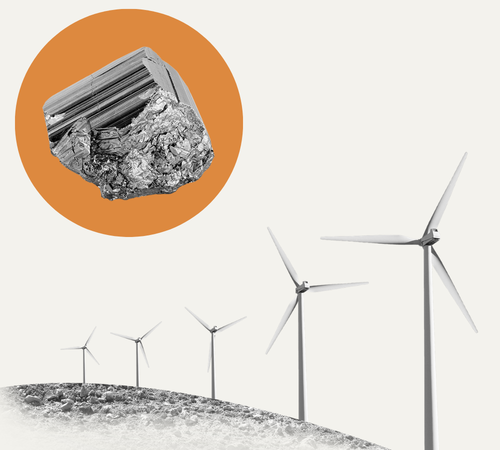
This report is a technical analysis of the permanent magnet material stocks available within the UK. Wind turbines contain large amounts of neodymium magnets in their generators. Neodymium is a valuable and important critical material for the UK’s sustainable energy transition, being used in electric motors of all kinds.
The report presents four gaps in existing policy and practises which could present barriers to grasping the opportunities from a UK wind turbine circular economy.
A domestic circular economy for permanent magnets could support our wind power goals, electricity system, as well as the broader UK manufacturing industry – including for EVs, low carbon shipping and aerospace, and even for heat pump systems.
Why is it valuable to have a domestic source of neodymium?
Neodymium is a critical material which is used in the magnets for wind turbines. The UK has been an early mover in the deployment of wind power, having deployed 30 GW of combined onshore and offshore wind as of 2025 and forecast to reach around 40 GW of offshore wind by 2030. Consequently, there is a large amount of neodymium in existing deployed turbines but also in newly commissioned ones.
Demand for neodymium is projected to increase faster than supply, creating the potential for a shortage which could impact UK industries. Current sourcing of neodymium magnets relies on mining and processing from overseas, much of which is geographically concentrated in China. Extracting and processing raw neodymium is complex and highly damaging to the environment. Finding a secondary source of neodymium therefore reduces risk of a shortage and reduces the environmental harm from expansion of neodymium mining. With the increased demand for electric vehicles (another use of neodymium) and large-scale deployment of more wind turbines, neodymium is currently crucial to the UK’s decarbonisation goals.
What opportunities exist in the UK economy?
The National Engineering Policy Centre warns that the UK must take action if we are to secure this strategic advantage and ensure that neodymium is returned to the UK economy.
Developing the UK’s circular economy of neodymium magnets would require actions such as:
-
- New wind turbines to be
- for magnets inside to be recovered safely and easily after a turbine is recycled.
-
Infrastructure for decommissioning wind turbines to be ready.
- A trade policy
- that keeps neodymium magnets within the UK and clear standards and regulation to ensure that remanufactured neodymium is able to be safely used for manufacturing and clean energy industries.
This analysis highlights four areas of opportunity in the existing wind turbine ecosystem:
How do wind-turbines work?
Wind turbines consist of a tower, generator, blades, foundations and basic control systems.
The rotor in a wind turbine has three blades, connected to the hub via a bearing and pitch control system. The hub is connected to the driveline, turning a rotor within a generator stator’s magnetic field to produce electricity. As the size and power generation capacity has grown over the years, neodymium permanent magnets are increasingly used in the rotor. This electricity is transmitted to shore by cables where it feeds into the national grid.
What happens next?
The UK has been a pioneer in offshore wind. The remanufacturing and recovery of magnets containing neodymium presents a valuable opportunity to capitalise on our existing lead.
For this to happen we need to reevaluate the design of turbines, the decommissioning infrastructure required and put in place clear guidelines and regulations on the reuse magnetic material.
If we get it right, this is a win-win for the environment and the economy, providing supply chain resilience, preventing environmental damage and supporting the UK's clean energy industries for a decarbonised future.

Acknowledgements
Lead authors
Dr Stuart Bradley, WMG, University of Warwick
Dr Russ Hall, WMG, University of Warwick
Additional drafting and editing
Keyne Walker, Royal Academy of Engineering
Dr Andrew Chilvers, Royal Academy of Engineering
External reviewers
Professor Gareth Hinds FREng
Lorna Bennet
Dr Jyoti Ahuja
Professor Deborah Greaves OBE FREng
Commissioned and reviewed by the NEPC Materials and Net Zero Working Group
Dr Colin Church
Dr Mike Cook FREng
Professor Joan Cordiner FREng FRSE (Chair)
Mark Enzer OBE FREng
Professor Mark Jolly
Professor Rebecca Lunn MBE FREng FRSE
Dr Charlotte Stamper
Rachel Stonehouse
Melissa Zanocco OBE



Related policy work
Reducing demand and ensuring sustainability for critical materials
A new report from the National Engineering Policy Centre about resource efficiency and demand reduction for critical ma…
Net zero
Addressing climate change is a major challenge of the 21st century. At the Academy, we’re taking a systems approach to…
Phase one: Enabling a decarbonised electricity system
Explore phase one of the NEPC's programme on decarbonising electricity in Great Britain.
Critical minerals
The Academy has produced two major critical minerals reports. The first on supply chain sustainability and the second o…